Introducing Amazon CloudWatch Omni: A Unified AI-Powered Observability Platform for Modern Engineering Teams

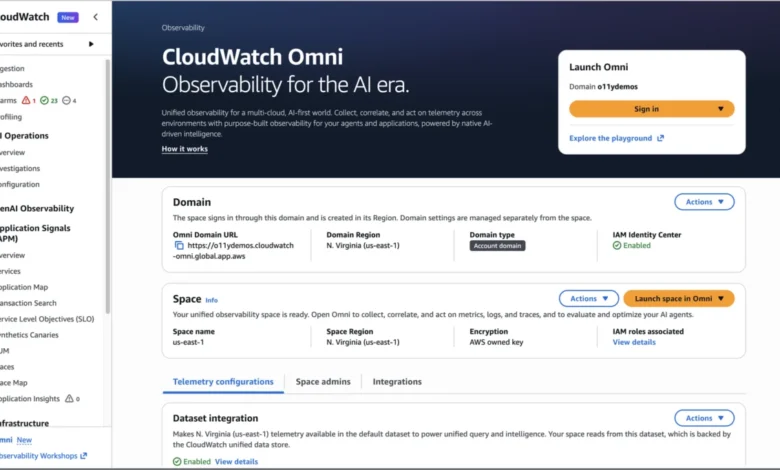
In a significant expansion of its cloud management portfolio, Amazon Web Services (AWS) has unveiled Amazon CloudWatch Omni, a specialized, AI-powered observability experience designed to unify the monitoring of complex applications and generative AI workloads. By decoupling the observability workspace from the traditional AWS Management Console, the platform aims to address a long-standing pain point for DevOps and Site Reliability Engineering (SRE) teams: the fragmentation of data across disparate tools, dashboards, and communication channels.
The launch marks a departure from traditional infrastructure-centric monitoring. Instead of forcing engineers to manually curate dashboards and tune static thresholds for individual server instances or containers, CloudWatch Omni organizes telemetry data—logs, metrics, and traces—around the application as a cohesive, evolving entity. This shift toward application-centric observability reflects the industry’s transition toward microservices architectures and decentralized, agentic AI systems that are increasingly difficult to monitor using legacy methods.
The Evolution of Observability and the "Dashboard Fatigue" Problem
For years, engineering organizations have struggled with "dashboard fatigue." Industry data suggests that SRE teams spend upwards of 30% to 40% of their time maintaining observability configurations, such as updating alert thresholds, building custom visualization panels, and stitching together logs from multiple disconnected sources during incident response. This administrative burden is compounded when issues cross functional boundaries, forcing developers, database administrators, and security specialists to manually share context via screenshots or lengthy communication threads.
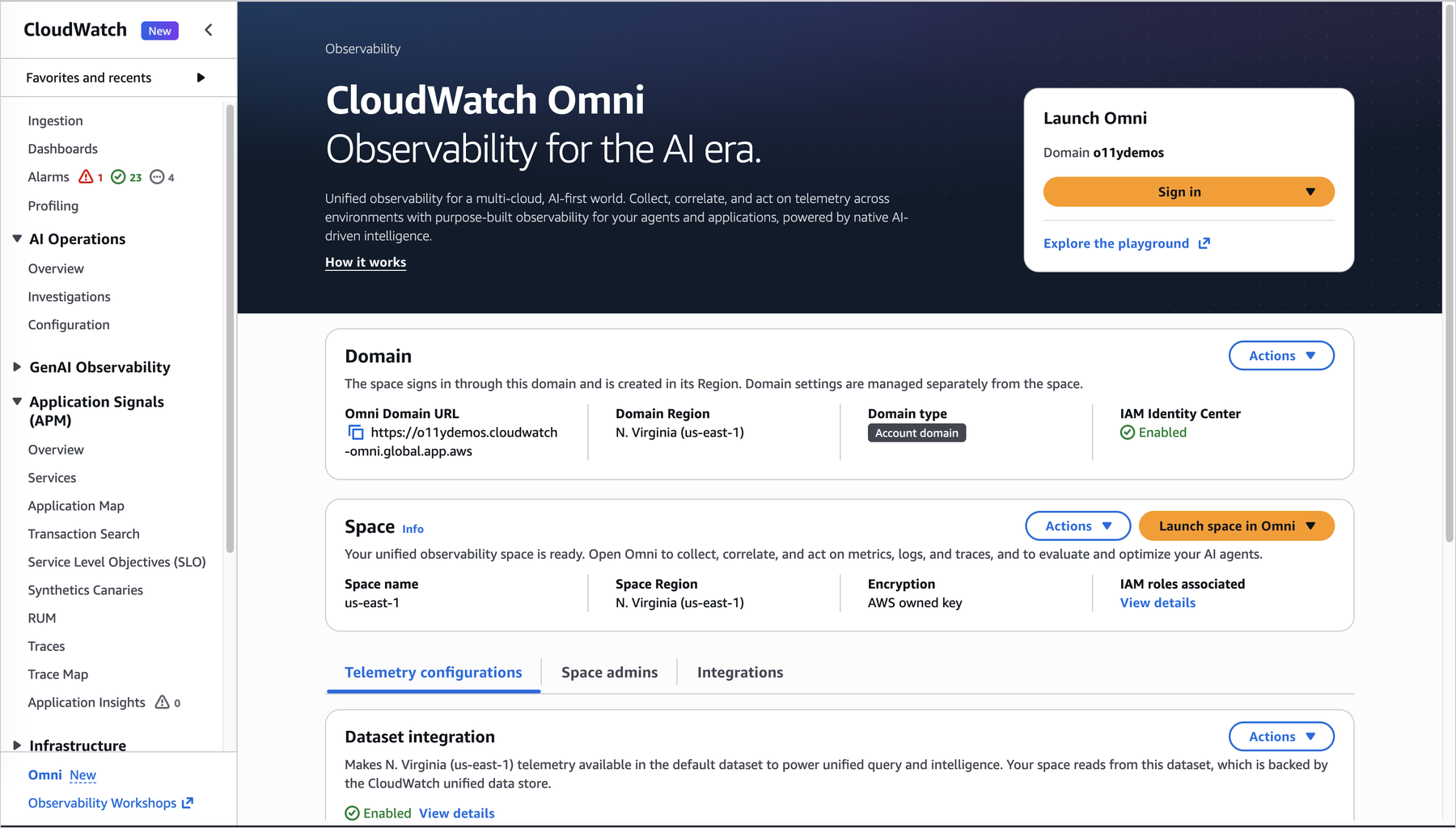
Amazon CloudWatch Omni seeks to resolve these inefficiencies by creating a "Single Source of Truth" accessible via a dedicated, secure URL. By integrating with enterprise Identity Providers—including Microsoft Entra ID and Okta—via AWS IAM Identity Center, the platform allows teams to bypass the complexities of the AWS Management Console while maintaining strict security and role-based access control.
Core Capabilities and Technical Architecture
At the heart of the Omni platform is a robust reliance on OpenTelemetry, the open-source industry standard for collecting and exporting cloud-native telemetry. Because Omni is built on the OpenTelemetry Protocol (OTLP), it does not require significant re-instrumentation for existing workloads already sending data to CloudWatch. For new applications, developers can simply direct their telemetry to an OTLP endpoint, ensuring that data flows seamlessly into the Omni workspace.

The platform’s functionality is built around three primary pillars:
- Collaborative Workspace: Every member of an engineering organization—regardless of their primary role—can access the same investigation session. This shared context is vital during incident management. When a service fails, the "state" of the investigation is preserved, meaning that if an SRE escalates an issue to a backend developer, the latter inherits the full context of the incident, including the specific traces, logs, and AI-derived insights accumulated by their predecessor.
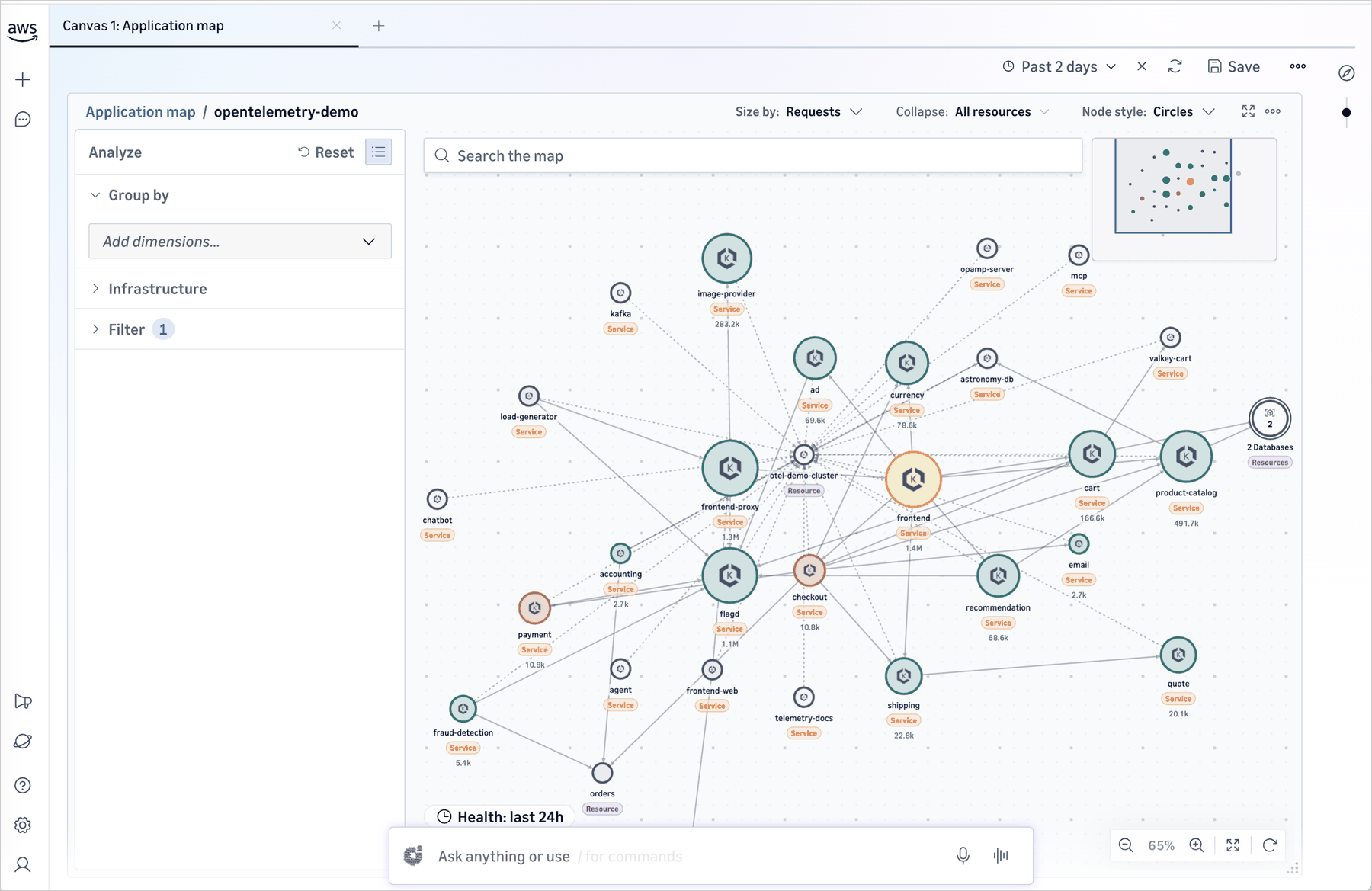
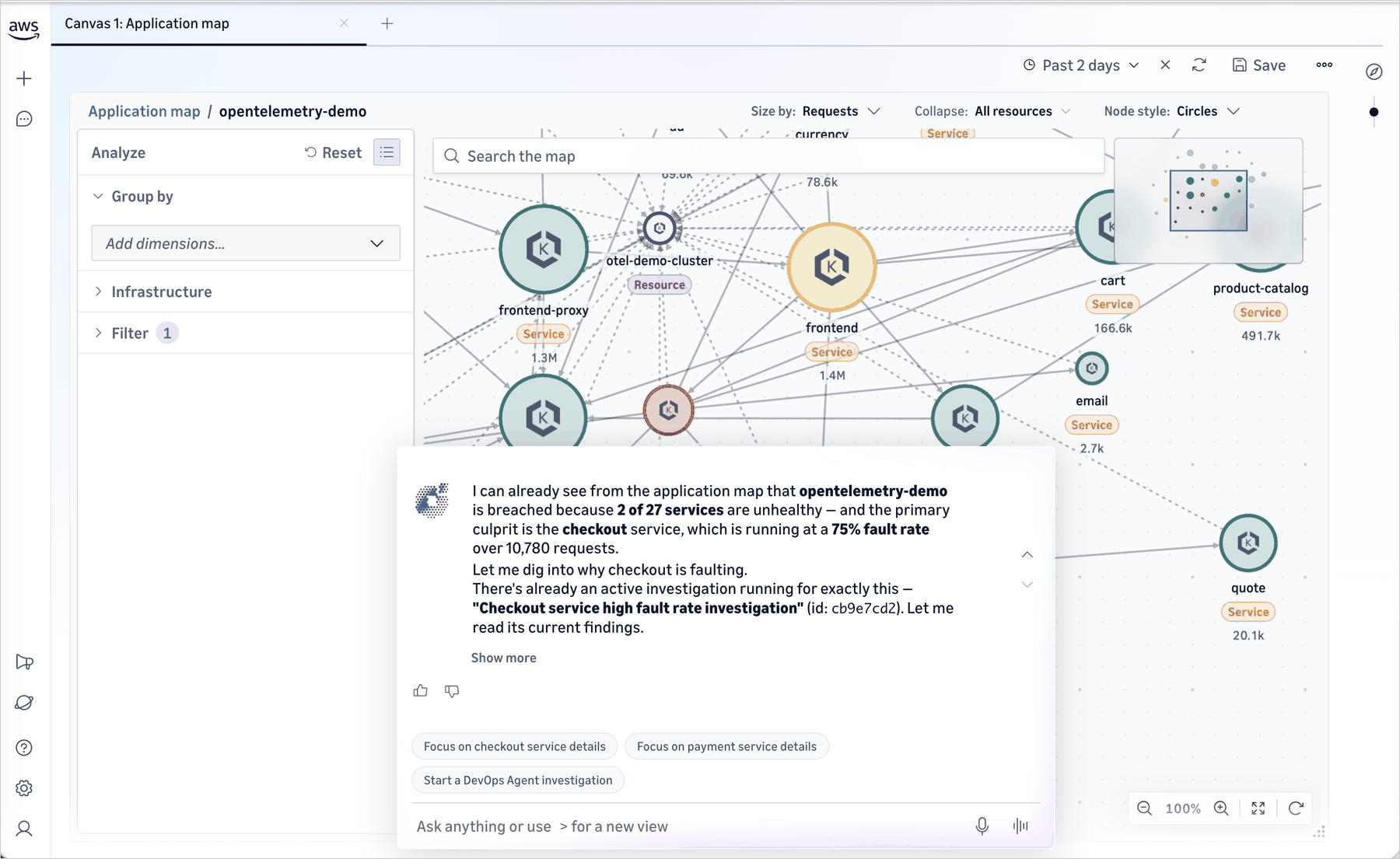
- Adaptive Topology Mapping: Omni utilizes automated discovery to map application dependencies. As services are deployed, updated, or decommissioned, the platform’s topology graph updates in real-time. This eliminates the need for manual diagramming and ensures that the system’s "map" always reflects the current production environment.
- The Amazon DevOps Agent: Perhaps the most ambitious feature is the integration of the Amazon DevOps Agent. This AI-powered assistant functions as a collaborator during investigations. It does not operate in a vacuum; it analyzes the same telemetry visible to the human engineers, providing grounded, context-aware suggestions. For example, the agent can correlate an increase in error rates with a specific deployment timestamp or a downstream latency spike, effectively acting as a "force multiplier" for on-call engineers.
Incident Response: A Practical Workflow
The practical utility of CloudWatch Omni is best illustrated through a typical incident scenario. Suppose a checkout service reports an anomalous spike in error rates. In a legacy environment, an engineer would likely spend several minutes toggling between separate logs, metric dashboards, and deployment history logs.
In the Omni environment, an investigation session is automatically initiated upon the triggering of an alarm. The workspace displays a pre-populated topology map, showing the checkout service and its dependencies. The Amazon DevOps Agent immediately flags a correlation: a deployment occurred 10 minutes prior, and a downstream payment API began exhibiting increased latency.
The SRE on duty can verify this correlation by inspecting the trace view to pinpoint the specific failing endpoint. If the SRE determines that the issue requires input from the payments team, the link to the session is shared. The payments engineer joins the session, instantly viewing the same correlated signals and the DevOps Agent’s initial root-cause analysis. The team identifies a configuration mismatch in the payment provider’s API gateway and executes a rollback—all within a single interface that automatically generates an incident history report, effectively removing the need for post-incident manual documentation.
Strategic Implications for Enterprises
The introduction of CloudWatch Omni signals a broader shift in the cloud computing market. AWS is clearly responding to the growing complexity of generative AI deployments. As companies move from experimental AI projects to production-grade "agentic" workloads, they face new observability challenges, such as tracking model inference latency, managing prompt tokens, and auditing the decision-making chains of autonomous agents.
By bundling application observability with these AI-specific capabilities, AWS is positioning itself to be the comprehensive "control plane" for the entire enterprise stack. This has significant implications for third-party observability providers, who must now compete with an integrated, native solution that offers a lower barrier to entry for existing AWS customers.
Furthermore, the platform’s ability to ingest telemetry from "other environments" suggests that AWS is adopting a more pragmatic, multi-cloud-friendly stance. By providing connectors for non-AWS environments, Omni aims to become the primary interface for observability, regardless of where the underlying infrastructure resides.
Implementation and Deployment
For current AWS customers, the adoption path is intentionally frictionless. By navigating to the CloudWatch console and selecting the "Try CloudWatch Omni" option, administrators can begin the onboarding process immediately. The setup involves:
- Identity Integration: Linking the organization’s SSO provider through IAM Identity Center.
- Space Configuration: Defining "Spaces," which serve as logical containers for specific applications, teams, or environments.
- Telemetry Mapping: Since the system consumes existing CloudWatch data, no data migration is required.
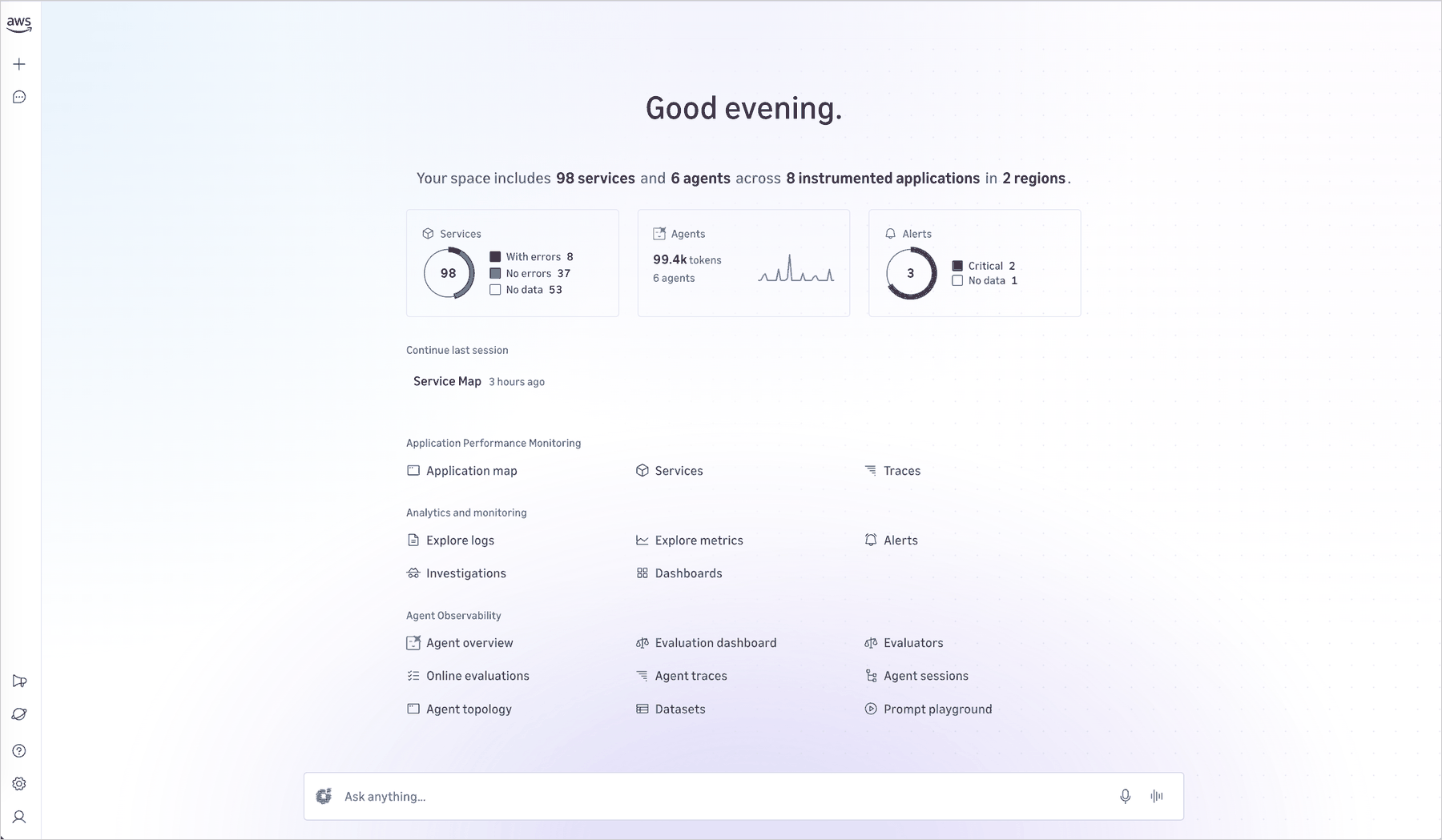
For large-scale, enterprise-wide deployments, the administrative process is centralized. An administrator defines the domain, sets up the relevant Spaces for various departments, and invites team members. Once the Space is defined, the automated discovery engine populates the application map, allowing teams to begin querying their systems using natural language almost immediately.
Analysis of the Competitive Landscape
The observability market has historically been dominated by specialized vendors such as Datadog, New Relic, and Dynatrace. These companies built their reputations on "vendor-agnostic" monitoring. AWS, by contrast, has historically been viewed as a platform-specific provider. With the release of CloudWatch Omni, AWS is directly challenging the "specialized tool" narrative.
The primary advantage for AWS lies in the "gravity" of the data. Because the vast majority of enterprise telemetry is already being generated within AWS environments, the latency and cost of moving that data to a third-party observability platform can be significant. By keeping the data within the AWS ecosystem and providing an AI-native interface, Amazon is betting that the convenience and performance of a native, integrated tool will outweigh the perceived benefits of a third-party, platform-agnostic alternative.
Conclusion and Future Outlook
As of late 2026, the industry is seeing a clear trend toward "AI-assisted operations." The launch of CloudWatch Omni is a definitive milestone in this journey. By automating the mundane aspects of observability—such as dashboard management and signal correlation—AWS is effectively raising the bar for what organizations should expect from their cloud management tools.
For engineering leaders, the focus must now shift from the mechanics of monitoring to the strategic interpretation of insights. As the Amazon DevOps Agent continues to evolve, it is likely that the role of the SRE will shift further toward high-level system architecture and governance, with the AI handling the heavy lifting of real-time signal analysis. While the platform is currently in its early stages of widespread adoption, its emphasis on collaboration, open standards, and AI-driven automation positions it as a significant challenger in the crowded observability market.
For now, the immediate value for enterprises remains clear: a reduction in mean-time-to-resolution (MTTR) and a more cohesive, data-driven approach to maintaining the reliability of modern, distributed applications. As organizations continue to integrate generative AI into their core business logic, the ability to observe, understand, and troubleshoot these systems in real-time will be a critical competitive differentiator.
Related posts: